Who Can Be Held Liable in a Multi-Vehicle Accident in Indiana?


Who Can Be Held Liable in a Multi-Vehicle Accident in Indiana?
One moment, traffic is moving normally. The next, brakes screech, metal crumples, and vehicles collide in rapid succession. Multi-vehicle accidents are chaotic, disorienting, and often devastating. For those left injured, the aftermath raises an urgent and difficult question: who is responsible?
Determining liability in a crash involving multiple vehicles is rarely straightforward. Several drivers, and sometimes third parties, may each share a portion of fault. Indiana law provides clear guidance on how this responsibility is divided, and at Paul Rossi Law Offices, we are committed to helping injured people hold every negligent party accountable.
Here is what you need to know about liability in a multi-vehicle accident in Indiana:
- Multiple drivers can share fault for the same crash.
- Indiana’s modified comparative fault system directly affects how much compensation you can recover.
- Evidence gathered at the scene and afterward determines how fault is assigned.
- Insurance companies representing different parties often dispute liability with each other.
- Indiana’s statute of limitations generally gives injured parties two years from the date of the accident to file a personal injury claim (Indiana Code § 34-11-2-4).
How Can Multiple Drivers Share Fault in a Chain-Reaction Crash?
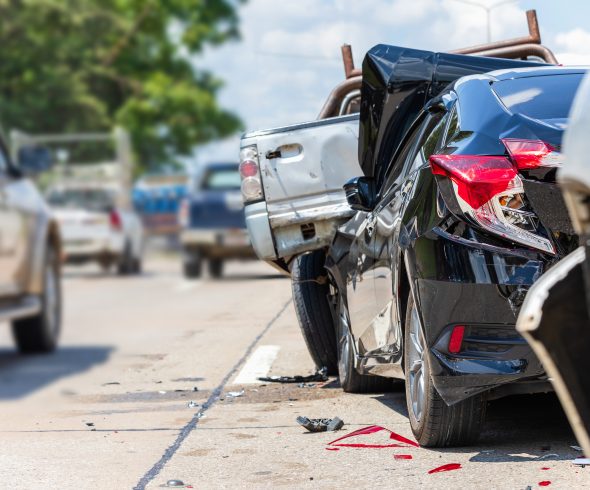
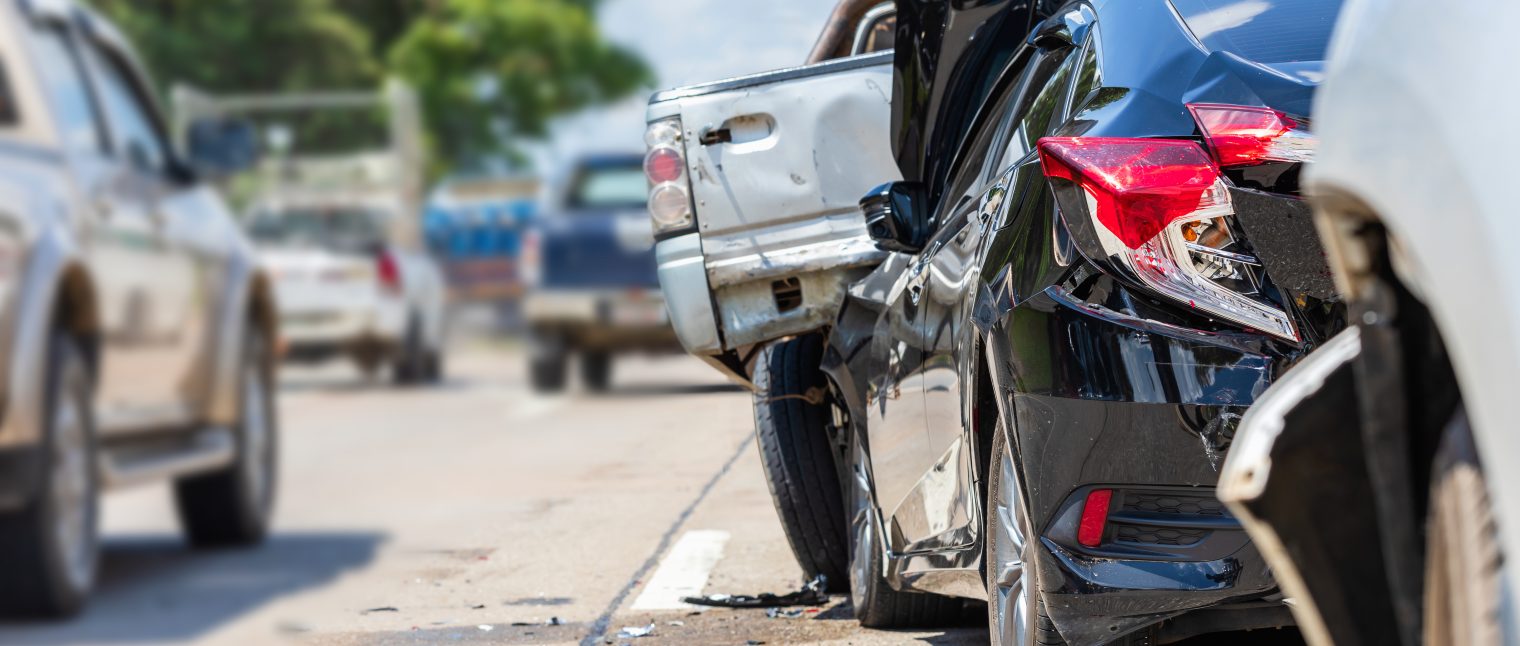
Multi-vehicle accidents, often called chain-reaction or pile-up crashes, frequently involve more than one negligent driver. A common example is a rear-end chain collision, in which one driver fails to stop in time, striking the vehicle ahead and pushing it into the next vehicle. In that scenario, the driver who initiated the first collision may bear the greatest share of fault. Still, a driver who was distracted or tailgating elsewhere in the chain may also bear responsibility.
Fault in these crashes can also extend to third parties beyond the drivers involved. Depending on the circumstances, potentially liable parties may include:
- A trucking company whose driver caused or contributed to the crash
- An employer whose employee was driving on company time
- A government agency responsible for failing to maintain safe road conditions
- A vehicle or parts manufacturer if a mechanical defect contributed to the accident
Identifying every responsible party is important because multiple liable parties often means multiple insurance policies available to cover your losses.
How Does Evidence Determine Who Is Liable in a Multi-Car Accident?
Assigning fault in a multi-vehicle accident requires a thorough investigation. Our team works to gather and preserve the evidence needed to build a strong claim on your behalf. Key evidence in these cases includes:
- Police reports: Officers document the positions of vehicles, witness information, any citations issued, and their initial assessment of what occurred.
- Witness statements: Accounts from bystanders or other drivers who saw the crash unfold.
- Surveillance and dashcam footage: Video captured by nearby cameras or in-vehicle recording devices can reconstruct the sequence of events.
- Vehicle damage analysis: The location and pattern of damage on each vehicle helps establish the direction and sequence of impacts.
- Event data recorders: Many modern vehicles store data such as speed, braking, and steering inputs at the time of a collision.
- Accident reconstruction: In complex pile-up cases, reconstruction specialists use forensic analysis and detailed measurements to determine how the crash occurred.
Insurance companies conduct their own investigations, typically focused on minimizing their share of fault. Having independent evidence gathered and analyzed by our team helps protect your claim from being undervalued or dismissed.
How Does Indiana’s Comparative Fault Law Affect Your Recovery?
Indiana follows a modified comparative fault system. This law assigns each party involved in an accident a percentage of fault based on their contribution to the crash. Your compensation is then reduced by your own percentage of fault.
For example, if you are awarded $100,000 but found to be 20% at fault, you can recover $80,000. However, if you are found to be 51% or more at fault, you cannot recover any damages.
This rule has significant implications in multi-vehicle accidents, where insurers may attempt to inflate your percentage of fault to reduce what they owe. Understanding how this system works, and having legal representation from our team at Paul Rossi Law Offices, can make a meaningful difference in the outcome of your claim.
How Do Insurance Disputes Between Multiple Drivers Complicate a Claim?
When more than one driver is at fault, multiple insurance carriers become involved, and that is where disputes become particularly difficult to resolve. Each insurer prioritizes protecting its own policyholder, which often results in:
- Carriers shifting blame to other drivers to reduce their exposure.
- Conflicting accounts of what happened and who caused what.
- Delayed negotiations as insurers communicate with each other.
- Settlement offers that do not account for the full extent of your injuries and losses.
Handling communications with several insurance companies at once is a significant burden for anyone recovering from injuries. Our team takes on that responsibility, negotiating firmly on your behalf and working to secure the full compensation you are owed.
Contact Paul Rossi Law Offices After a Multi-Vehicle Accident
Multi-vehicle accidents present serious legal and financial challenges for those injured. Shared fault, disputed evidence, and competing insurance carriers all make these cases difficult to resolve without skilled legal representation.
At Paul Rossi Law Offices, we have over 75 years of litigation experience helping injured people throughout Northwest Indiana hold negligent parties accountable. Time matters in these cases. Evidence can disappear, and Indiana’s two-year filing deadline will not wait. Contact our office today for a case evaluation, and let our team fight for the compensation you are entitled to.